













 soundproofing
We take our time and your suitable contact person will answer all your questions about your individual project. We look forward to meeting you. Guaranteed!
Noise protection in plastics processing is a key occupational safety requirement for manufacturing companies. Granulators and cutting mills generate sound levels of 90 to 105 dB(A), making them among the loudest individual sources in production halls. Employers are required to provide hearing protection from 80 dB(A), and wearing it becomes mandatory from 85 dB(A) under the German Noise and Vibration Occupational Safety Regulation (LärmVibrationsArbSchV). The typical noise levels of common machines in the plastics industry illustrate the need for action.
| Machine | Sound Level |
|---|---|
| Cutting mill / Granulator | 90 to 105 dB(A) |
| Hydraulic injection moulding machine | 75 to 85 dB(A) |
| All-electric injection moulding machine | 59 to 70 dB(A) |
| Extruder | 75 to 90 dB(A) |
| Hydraulic press | 80 to 95 dB(A) |
In a typical injection moulding hall with multiple machines, mills and peripheral equipment, the individual levels add up to an overall hall noise level of 80 to 90 dB(A). Pneumatic conveying systems, dryers and compressors contribute additional noise. In many facilities, the cumulative effect significantly exceeds the legal limits.
With over 300,000 employees in the German plastics industry, this issue affects a large number of companies. Professional noise protection in plastics processing safeguards your employees against irreversible hearing damage, ensures compliance with legal requirements and improves working conditions across your entire operation.
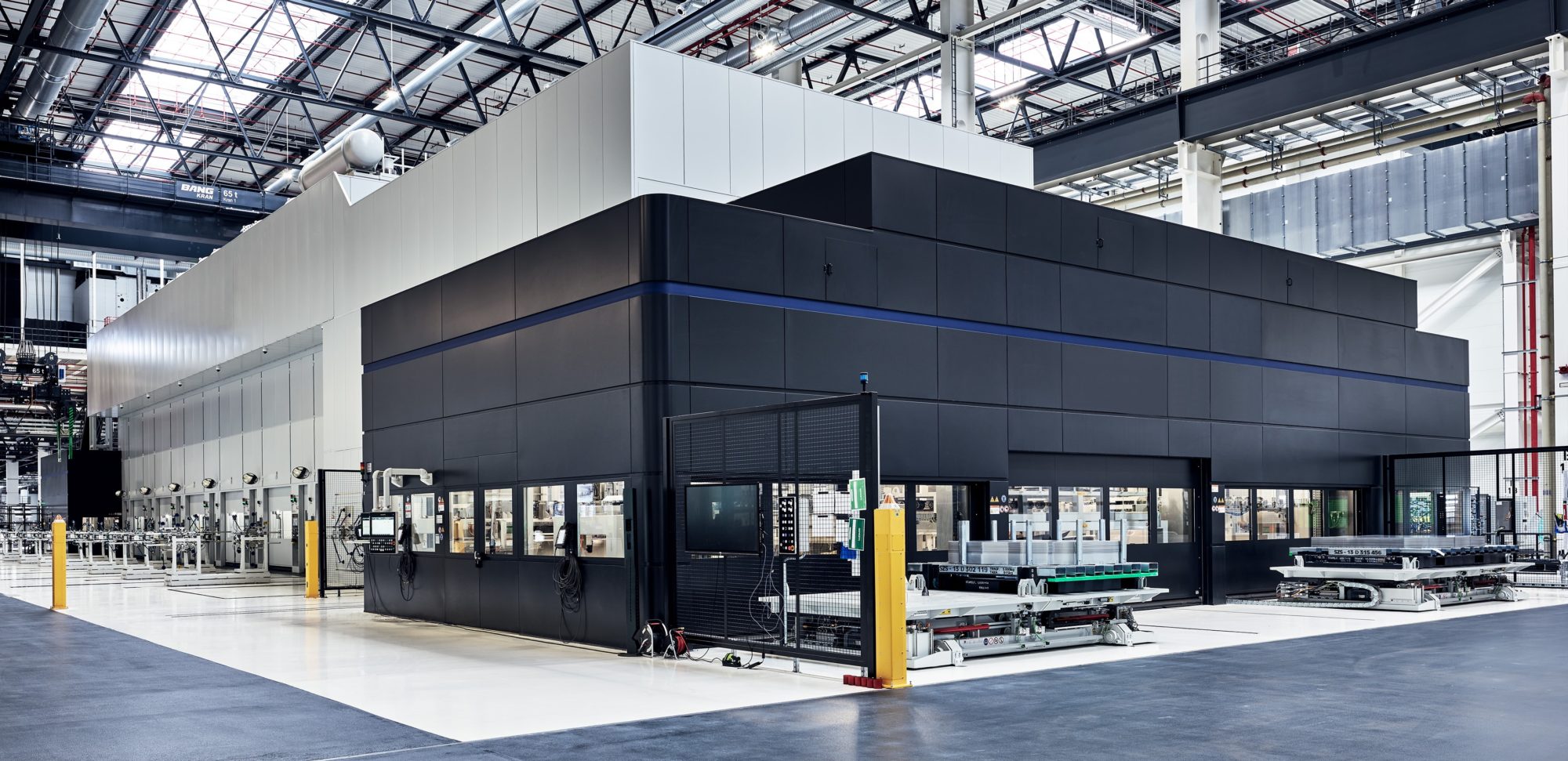
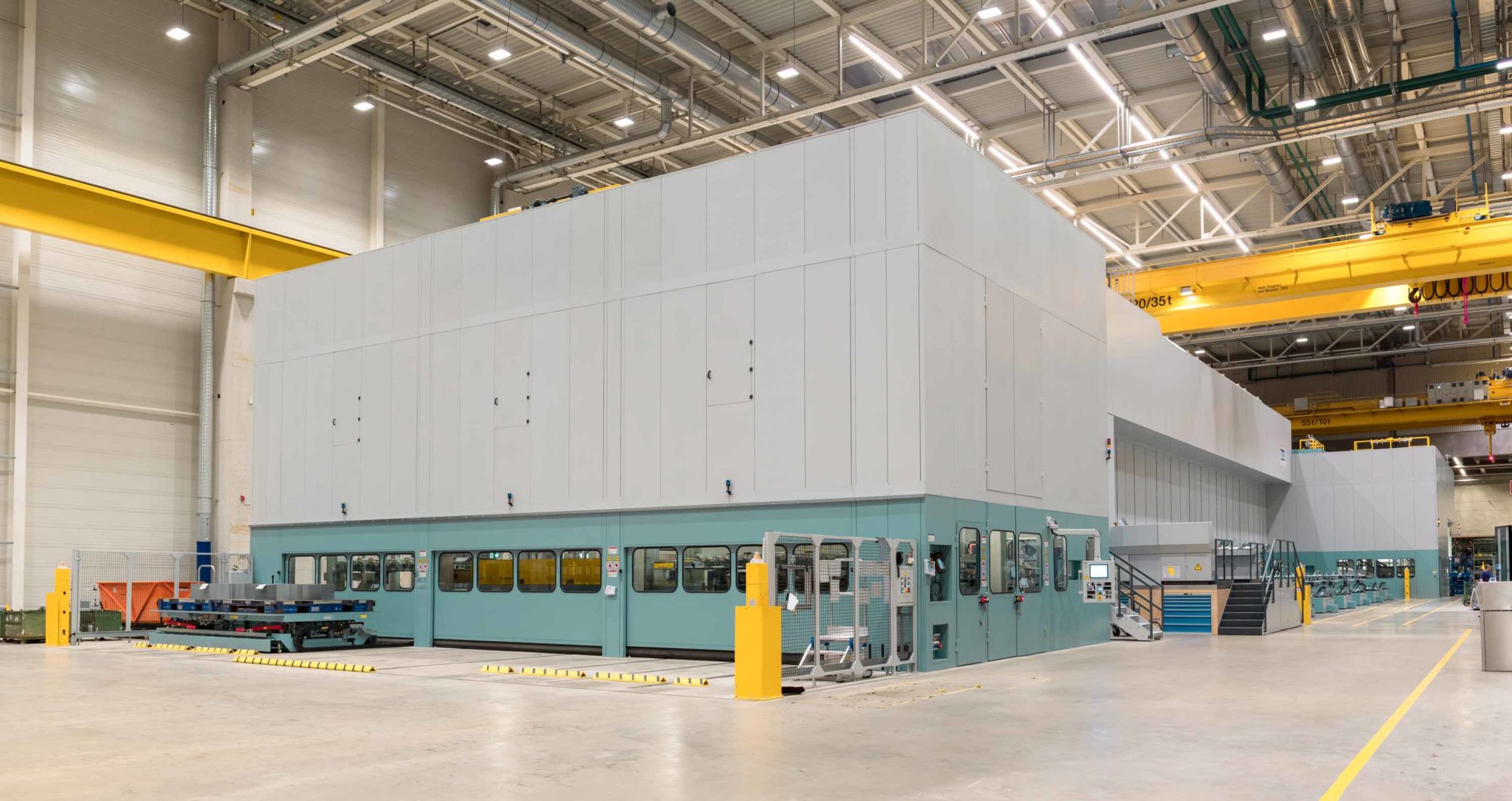
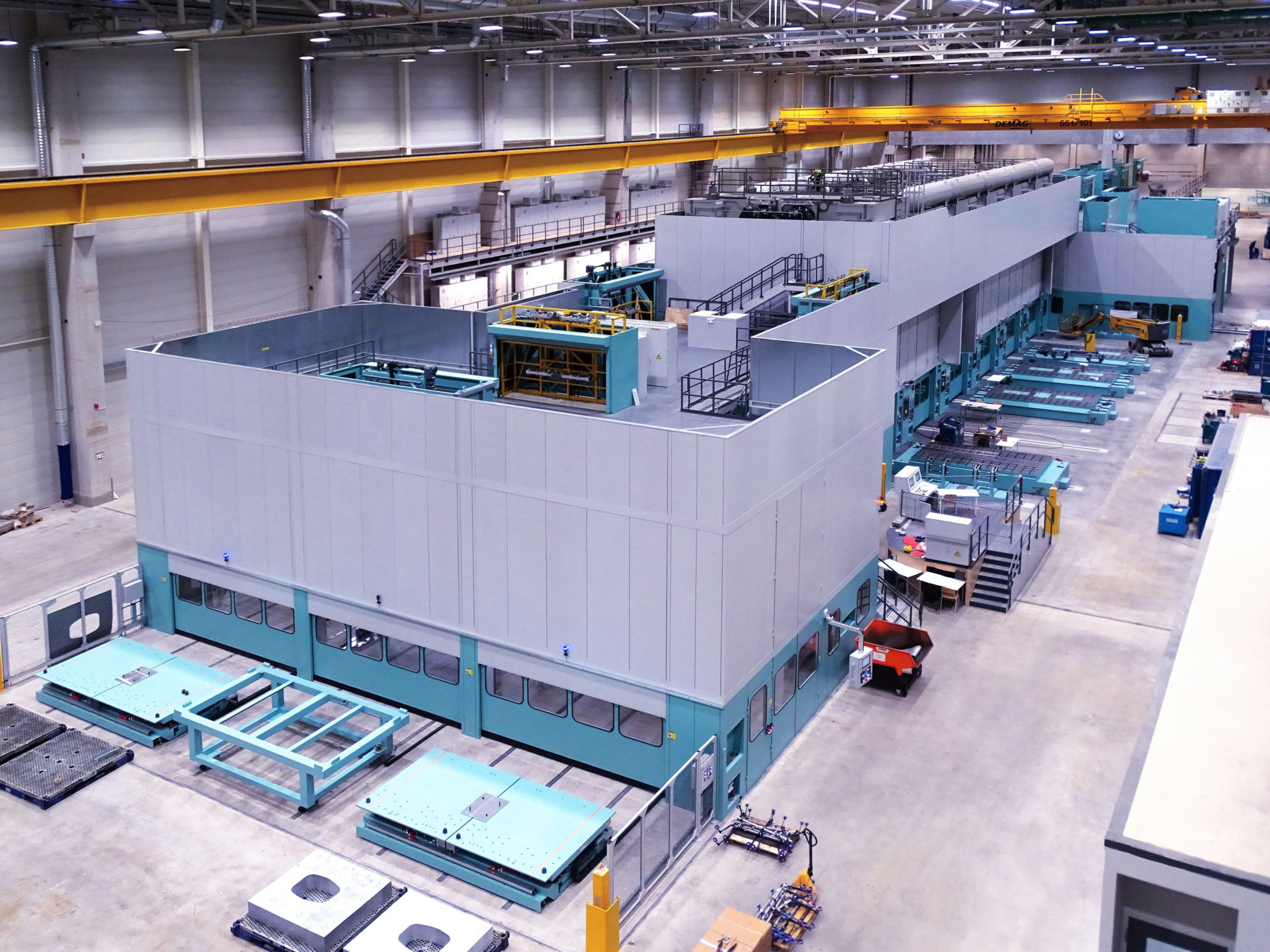
Machine enclosures offer the most effective protection against noise from injection molding machines, extruders, and presses. Double-walled steel constructions filled with mineral wool achieve a noise reduction of 20 to 30 dB(A) and reduce the sound level of a cutting mill from 100 dB(A) to below 75 dB(A). For particularly loud machines such as granulators, full enclosures with sound insulation values of up to Rw 43 can be implemented.
Machine enclosures specifically encapsulate individual noise sources without enclosing the entire machine. These partial enclosures are particularly suitable for hydraulic units and drive units, which generate most of the noise. Sound barriers also create defined noise areas within the production hall and effectively shield quieter workplaces.
Each solution is individually tailored to the machinery and spatial conditions. The sta Group’s state-of-the-art 3D scanner captures millimeter-precise digital measurements on site, ensuring that enclosures and cladding for sound insulation in plastics processing are manufactured to fit perfectly. Elements up to 6 m in length are produced in-house on an automated plasma system.
As a full-service provider, sta Group supports plastics processors from the initial analysis to the final installation. Experienced project managers assess the noise situation in your production hall, identify the critical sources of noise, and develop a customized protection concept. The sound insulation consultation also includes a well-founded cost-benefit analysis for your project.
With its own production facilities, in-house trained specialists, and experienced installation teams, sta Group guarantees on-time implementation with the highest quality standards. In 2024, the company was named a TOP 100 Innovator, making it one of the most innovative medium-sized companies in Germany. Since 1986, sta has been implementing challenging sound insulation projects for well-known industrial companies.
Whether it’s an enclosure for a single cutting mill or a comprehensive acoustic concept for an entire injection molding hall, the sta Group delivers tailor-made sound insulation for plastics processing on any scale. Get in touch and let us advise you without obligation. Together, we will develop a solution that protects your employees and optimizes your production in the long term.
Noise-induced hearing loss (BK 2301) is the most common occupational disease in Germany, with 8,897 recognized cases in 2024. In the plastics industry, employees are often exposed to a double burden, as chemical emissions from thermal processing occur in addition to noise. Once damaged, hearing cannot regenerate, which makes prevention through technical sound insulation indispensable.
The LärmVibrationsArbSchV (Noise and Vibration Occupational Safety and Health Regulation) defines clear levels of action for employers. From 80 dB(A) daily noise exposure, hearing protection and instruction are mandatory; from 85 dB(A), a noise reduction program must be established and noise areas must be marked. The exposure limit of 87 dB(A) must not be exceeded, taking into account hearing protection.
Professional sound insulation in the plastics industry goes beyond mere compliance with regulations. Reduced noise levels increase concentration, reduce error rates, and increase employee satisfaction. Investments in noise protection pay off through reduced downtime, lower staff turnover, and measurably higher productivity.
Plastics processing places special demands on enclosed enclosures. Injection molding machines, extruders, and presses generate considerable process heat at processing temperatures of 150 to 350 °C. Without integrated ventilation, there is a risk of heat build-up, which impairs machine life and product quality. Silencers in the ventilation ducts prevent sound transmission to the outside.
When plastics are heated and processed, harmful decomposition products are produced, which must be collected by extraction systems. Each extraction opening breaks through the enclosed housing and creates potential sound bridges. Sophisticated designs combine efficient extraction with soundproofed ducts, thus keeping the overall noise level at the workplace within the standard limits.
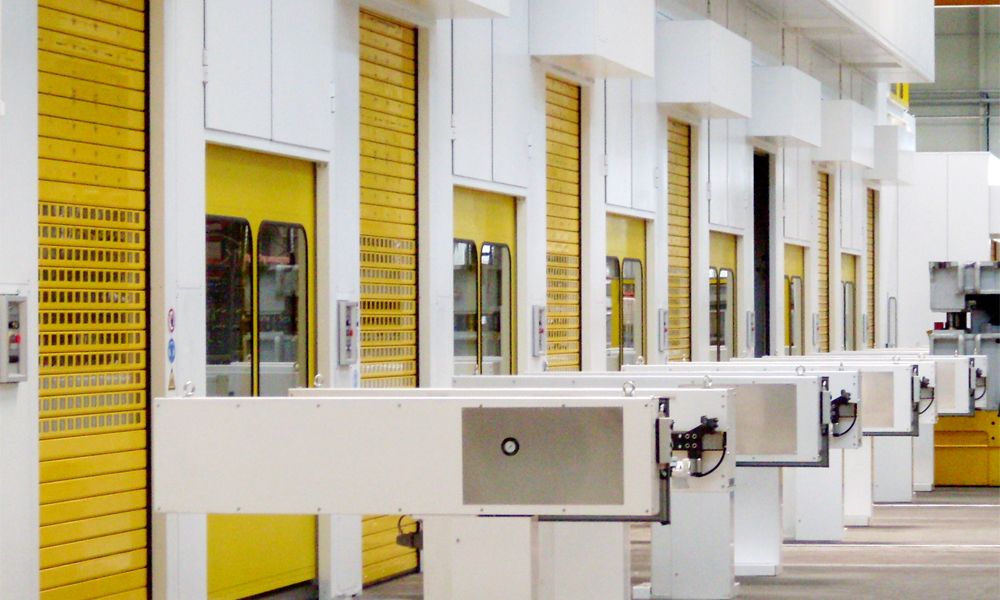
Material feed via granulate conveyor and parts removal by robots require additional openings in enclosures. Soundproof airlocks, lamella curtains, and automatic closure systems minimize sound leakage at these points. The vibration decoupling of the machines from the hall floor additionally prevents structure-borne sound transmission via foundations and building structures.
 soundproofing
We take our time and your suitable contact person will answer all your questions about your individual project. We look forward to meeting you. Guaranteed!


sta group
Wir sind fest davon überzeugt, dass das Internet für alle Menschen zugänglich sein sollte. Deshalb setzen wir uns dafür ein, eine Website bereitzustellen, die für möglichst viele Nutzerinnen und Nutzer zugänglich ist – unabhängig von deren Lebensumständen oder Fähigkeiten.
Um dieses Ziel zu erreichen, orientieren wir uns so genau wie möglich an den Richtlinien für barrierefreie Webinhalte (Web Content Accessibility Guidelines – WCAG 2.1) des World Wide Web Consortiums (W3C), auf Konformitätsstufe AA. Diese Richtlinien beschreiben, wie Webinhalte für Menschen mit unterschiedlichsten Beeinträchtigungen zugänglich gemacht werden können. Ihre Einhaltung hilft uns, die Website für alle zugänglich zu machen – für blinde Menschen, Menschen mit motorischen Einschränkungen, Sehbehinderungen, kognitiven Beeinträchtigungen und mehr.
Diese Website nutzt verschiedene Technologien, um jederzeit ein Höchstmaß an Barrierefreiheit zu ermöglichen. Dazu gehört eine spezielle Benutzeroberfläche, die es Menschen mit spezifischen Einschränkungen erlaubt, die Darstellung der Website individuell an ihre Bedürfnisse anzupassen.
Zudem kommt eine KI-gestützte Anwendung zum Einsatz, die im Hintergrund läuft und fortlaufend die Barrierefreiheit optimiert. Diese Anwendung überarbeitet den HTML-Code der Website, passt die Funktionsweise für Bildschirmleseprogramme für blinde Nutzer sowie für Tastaturfunktionen für motorisch eingeschränkte Personen an.
Wenn Sie eine Störung bemerken oder Verbesserungsvorschläge haben, freuen wir uns über Ihre Rückmeldung. Sie können uns unter folgender E-Mail-Adresse kontaktieren: 02682 95270
Unsere Website implementiert die ARIA-Attribute (Accessible Rich Internet Applications) sowie verschiedene verhaltensbasierte Anpassungen, damit blinde Nutzerinnen und Nutzer die Inhalte mit Bildschirmleseprogrammen lesen, verstehen und nutzen können. Sobald eine Person mit einem Screenreader unsere Website betritt, wird ihr automatisch angeboten, das Screenreader-Profil zu aktivieren, um die Seite optimal bedienen zu können. Im Folgenden zeigen wir, wie unsere Website zentrale Anforderungen für Screenreader erfüllt:
Optimierung für Screenreader: Ein Hintergrundprozess analysiert die gesamte Website, um eine fortlaufende WCAG-Konformität auch bei Änderungen sicherzustellen. Dabei stellt er Screenreadern über die ARIA-Attribute sinnvolle Informationen bereit, z. B. korrekte Beschriftungen von Formularfeldern, Beschreibungen für klickbare Symbole (z. B. Social Media, Suche, Warenkorb), Hinweise zur Validierung, Rollen von Elementen wie Buttons, Menüs oder Popups. Der Prozess analysiert außerdem alle Bilder der Website und erstellt mithilfe von Objekterkennung sinnvolle ALT-Texte für nicht beschriebene Bilder. Eingebettete Texte werden über eine OCR-Technologie extrahiert. Um den Screenreader-Modus zu aktivieren, drücken Nutzer einfach die Tastenkombination Alt+1. Der Modus wird automatisch angekündigt, sobald ein Screenreader erkannt wird.
Diese Funktionen sind mit allen gängigen Screenreadern wie JAWS und NVDA kompatibel.
Optimierung der Tastaturnavigation: Der Hintergrundprozess passt den HTML-Code der Website an und ergänzt JavaScript-Funktionen, um die Bedienung per Tastatur zu ermöglichen. Nutzer können mit Tab und Shift+Tab navigieren, Dropdowns mit Pfeiltasten steuern, mit Esc schließen, mit Enter Buttons und Links aktivieren, sowie Radio- und Checkboxen mit Pfeiltasten auswählen und mit Enter oder Leertaste aktivieren. Zudem stehen Schnellnavigationen und Überspringen-Menüs bereit, die mit Alt+1 aufrufbar oder beim Start der Seitennavigation mit der Tastatur direkt erreichbar sind. Der Fokus wird automatisch auf Popups gesetzt, sobald diese erscheinen, damit er nicht verloren geht.
Es sind auch Shortcuts wie „M“ (Menüs), „H“ (Überschriften), „F“ (Formulare), „B“ (Buttons) und „G“ (Grafiken) verfügbar, um gezielt zu bestimmten Elementen zu springen.
Wir bemühen uns, möglichst viele Browser und unterstützende Technologien zu unterstützen, damit unsere Nutzer ihre bevorzugten Tools frei wählen können. Deshalb gewährleisten wir die Kompatibilität mit über 95 % der marktüblichen Systeme, einschließlich Google Chrome, Mozilla Firefox, Apple Safari, Opera und Microsoft Edge sowie mit den Screenreadern JAWS und NVDA.
Trotz unserer umfassenden Bemühungen kann es vorkommen, dass bestimmte Seiten oder Abschnitte noch nicht vollständig barrierefrei sind, sich in der Umstellung befinden oder technisch (noch) nicht umsetzbar sind. Wir arbeiten kontinuierlich an der Verbesserung unserer Barrierefreiheit, entwickeln neue Funktionen und setzen technische Innovationen ein, um den bestmöglichen Zugang zu gewährleisten. Für Fragen oder Unterstützung kontaktieren Sie uns bitte unter: 02682 95270